


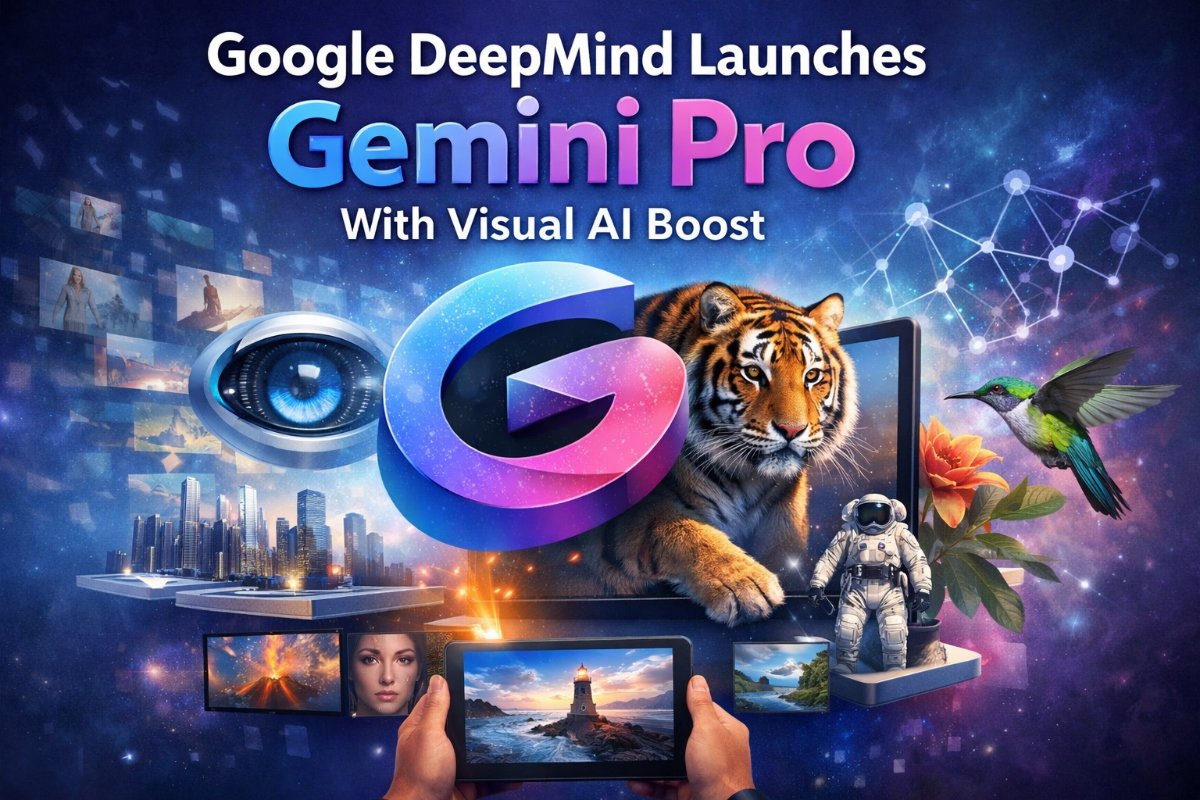
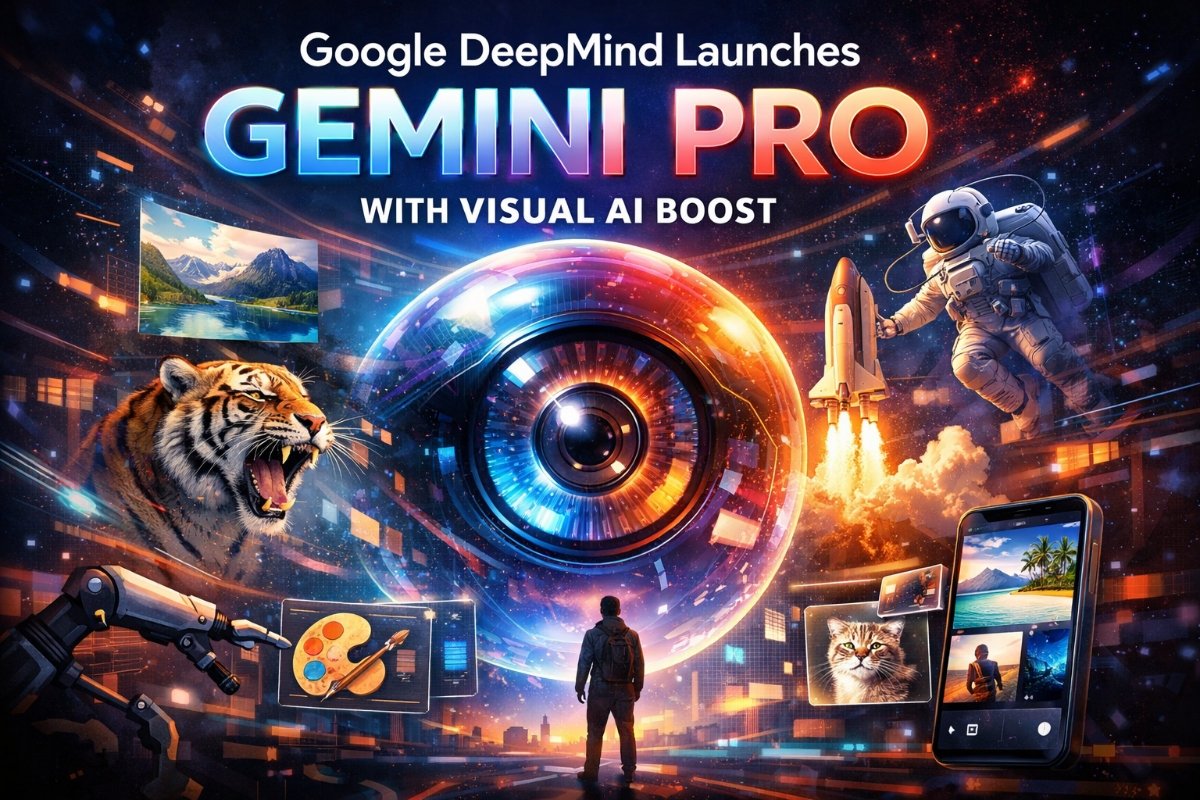
Google DeepMind has taken another step in the race to define the future of artificial intelligence with the rollout of Gemini Pro’s enhanced visual capabilities. While the headline may sound like a routine model upgrade, the implications run deeper. This update signals a shift toward AI systems that don’t just process text, but understand the world more like humans do, through images, context, and multimodal reasoning.
At a time when AI is moving beyond chat interfaces into real-world workflows, this matters. The addition of stronger visual intelligence to Gemini Pro positions Google to compete more aggressively across search, productivity, and developer ecosystems. It also raises the stakes for how AI will be used in everyday tasks, from analyzing documents and images to automating complex decisions.
This article breaks down what Google DeepMind has launched, what makes the visual AI boost significant, and how it could reshape the competitive landscape and real-world applications of AI.
What is Gemini Pro?
Gemini is Google DeepMind’s flagship family of multimodal AI models, designed to handle text, images, audio, and more within a unified architecture. It represents Google’s answer to the growing demand for systems that can reason across different types of data instead of treating them separately.
Gemini Pro sits in the middle tier:
- More capable than lightweight models designed for speed
- Less resource-intensive than top-tier models like Gemini Ultra
- Optimized for scalability across products and APIs
Where Gemini Pro Fits
- Developers building AI-powered applications
- Businesses integrating AI into workflows
- Google’s own products, including search and productivity tools
Key Upgrades in the Latest Release
- Improved image interpretation
- Better contextual understanding
- Enhanced multimodal reasoning
Visual AI Boost Explained
Visual AI refers to the model’s ability to understand, interpret, and reason using visual inputs such as images, diagrams, and screenshots.
Core Capabilities
- Image understanding: Recognizing objects and scenes
- Contextual interpretation: Understanding meaning within context
- Multimodal reasoning: Combining text and image inputs
Example
A user uploads an image of a broken object and asks what’s wrong. Gemini Pro can identify the issue and suggest possible fixes.
Real-World Use Cases
Business Applications
- E-commerce product analysis
- Customer support using images
- Visual data interpretation
Developer Use Cases
- Building multimodal apps
- UI debugging tools
- Document and image parsing
Consumer Impact
- Smarter AI assistants
- Better support for visual tasks
- More intuitive interactions
Competitive Landscape
Gemini Pro competes with leading AI models from OpenAI and Anthropic.
- Google Gemini Pro: Strong multimodal integration
- OpenAI models: Strong ecosystem and adoption
- Anthropic Claude: Focus on safety and reasoning
The competition is shifting toward who can build the most capable multimodal AI platform.
Strategic Implications
Search Evolution
- More visual and contextual queries
- AI-driven search experiences
Productivity Tools
- Smarter document and data analysis
- Automation of visual workflows
AI Agents
- Systems that interact with interfaces
- Automation of real-world tasks
Risks and Limitations
- Accuracy issues in image interpretation
- Bias and hallucination risks
- High infrastructure and compute costs
Future Outlook
AI is moving toward fully multimodal systems capable of understanding text, visuals, and real-world context together.
- Deeper integration across platforms
- More advanced AI agents
- Improved real-time reasoning
Also Read: How AI Agents Are Changing Business Automation in 2026
Conclusion
Google DeepMind’s Gemini Pro update reflects a broader shift in AI development. With stronger visual AI capabilities, systems are becoming more intuitive, practical, and aligned with real-world use cases.
For businesses, developers, and users, this marks a step toward more capable and useful AI systems that go beyond text-based interaction.
FAQs
What is Gemini Pro?
Gemini Pro is a multimodal AI model developed by Google DeepMind that can process text, images, and other data types.
What is visual AI?
Visual AI refers to the ability of AI systems to understand and interpret images and visual data.
How is Gemini Pro different from GPT models?
Gemini Pro focuses on multimodal capabilities and integration within Google’s ecosystem, while GPT models are widely adopted for language tasks.
What are real-world uses of visual AI?
Visual AI is used for image analysis, customer support, document processing, and more.
Why does multimodal AI matter?
It allows AI to process multiple types of data together, making it more useful and human-like in understanding.
Is Gemini Pro available for developers?
Yes, it is available through APIs for developers to integrate into applications.
So, this was the BigStory of Google DeepMind’s Gemini Pro, highlighting how the shift toward visual and multimodal AI is changing what these systems can actually do in the real world. It’s not just another model update. It reflects a deeper move toward AI that can understand images, context, and intent together, making interactions more practical, intuitive, and action-driven.
At BigStories, the focus is on unpacking what these developments really mean, the thinking behind the technology, the competitive landscape shaping it, and the real-world impact on businesses, developers, and users. If this breakdown helped you better understand where Gemini Pro and visual AI are headed, share it with founders, operators, and anyone tracking the next phase of artificial intelligence, and explore more BigStories that decode how technology is evolving and what it means in practice.