



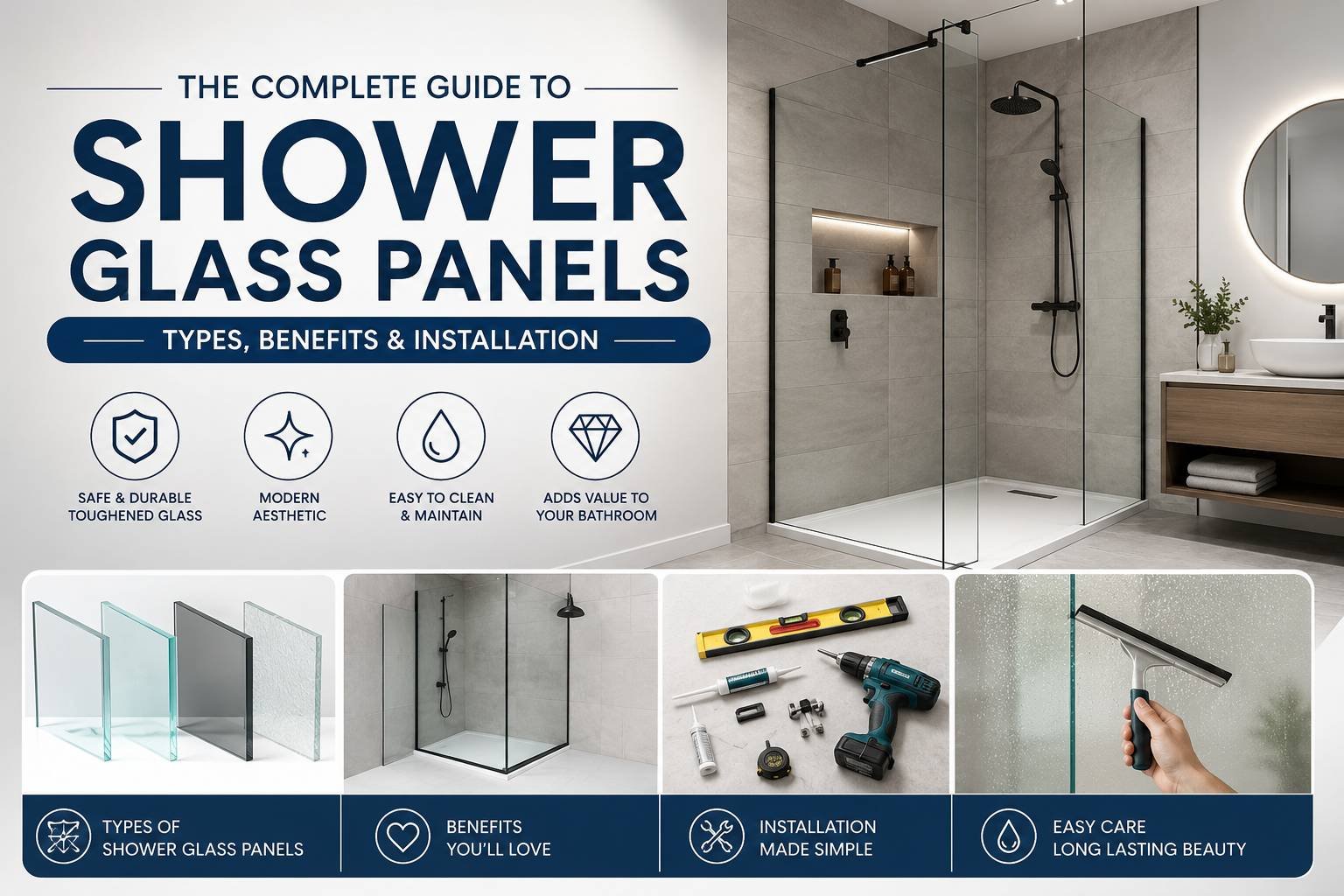
Anyone who has stood in a hardware showroom trying to decide between a shower curtain and a glass panel knows the decision is not as simple as it looks. Shower glass panels have become the standard choice in British bathrooms over the last decade, and for good reason.
They look smarter, they last longer, and they make even a modest bathroom feel like it belongs in a much larger house. This guide walks through everything a homeowner needs to know before buying, fitting, or maintaining shower glass panels.
You will find the different types available, how to choose the right one for your space, what proper installation actually involves, and how to keep the glass looking clear for years rather than months.
Whether you are renovating a family bathroom or fitting a compact en-suite, the aim here is to give you practical, honest information rather than a sales pitch.
What Is a Shower Glass Panel?
A shower glass panel is a fixed or moving sheet of toughened safety glass used to contain water within a shower area. It can stand alone next to an open shower, form part of a walk-in enclosure, or be paired with a hinged or sliding door to create a fully enclosed cubicle.
The key difference between a glass panel and a shower curtain comes down to permanence and material. A curtain is fabric or PVC, hung on a rail, and moves freely with airflow. A glass panel is a solid, fixed structure, usually between 6mm and 10mm thick, fitted directly to the floor, wall, or ceiling with brackets or a channel system.
Glass panels also differ from fully enclosed shower cabins, which are pre-built self-contained units often including their own base, walls, and sometimes a roof. A glass panel is more flexible. It can be added to an existing shower tray or wet room floor without needing a complete cabin structure.
Common Uses
- Wet rooms where an open, minimalist look is wanted
- Family bathrooms needing a splash guard alongside a bath
- En-suites where space is limited and a bulky frame would feel cramped
- Walk-in showers designed for accessibility or a spa-like feel
Where Glass Panels Work Best
Glass panels suit almost any bathroom style, but they particularly shine in rooms with good natural light, where the transparency of the glass can be shown off rather than hidden. They also work well in smaller bathrooms, since they do not visually block off space the way a solid screen or curtain does.
Types of Shower Glass Panels
Not all shower glass panels are built the same way. The type you choose affects the look of your bathroom, how much it costs, and how easy it is to keep clean.
Frameless Glass Panels
Frameless panels use thick toughened glass, typically 8mm to 10mm, held in place with minimal metal brackets or a discreet channel at the base. There is no metal frame running around the edge of the glass.
- Advantages: Sleek appearance, easier to clean since there is no frame to trap grime, glass appears to “float” for a more spacious feel.
- Disadvantages: More expensive, requires thicker and heavier glass, installation must be precise since there is no frame to hide small gaps.
Semi-Frameless Glass Panels
These use a partial frame, usually along the hinge or fixing edge only, while the rest of the panel remains frame free.
- Advantages: A good middle ground between cost and appearance, slightly more forgiving during installation.
- Disadvantages: Still has some visible metalwork, which some homeowners want to avoid entirely.
Framed Glass Panels
A full metal frame surrounds the glass on all sides, typically in aluminium or chrome finishes.
- Advantages: Lower cost, thinner glass can be used since the frame provides structural support, generally easier and quicker to fit.
- Disadvantages: Frames can trap limescale and mould, and the look is dated compared with frameless designs.
Fixed Panels
A single stationary sheet of glass with no moving parts, often used alongside a bath or as one wall of an open shower area.
- Advantages: Simple, robust, nothing to hinge or slide, fewer failure points over time.
- Disadvantages: Does not fully enclose the shower, so some splash may still escape depending on layout.
Walk-in Panels
Designed with a wide opening rather than a hinged or sliding door, walk-in panels allow entry without any door mechanism at all.
- Advantages: Excellent for accessibility, no door to catch or squeak, easy to step in and out.
- Disadvantages: Needs a larger floor area, and can allow more water to escape onto the bathroom floor if not planned carefully.
Sliding Glass Panels
Doors that slide along a track rather than swinging outward.
- Advantages: Ideal for tight spaces where a hinged door would hit the sink or toilet, no swing radius needed.
- Disadvantages: Tracks can collect grime and require more frequent cleaning.
Hinged Glass Panels
Doors mounted on hinges that swing open like a conventional door.
- Advantages: Wider opening for easier access, cleaner overall look since there is no track.
- Disadvantages: Needs floor space to swing open, which may not suit a small bathroom.
Frosted Glass
Treated to obscure visibility while still allowing light through.
- Advantages: Privacy, and shows watermarks and soap scum less obviously than clear glass.
- Disadvantages: Textured surface can be slightly harder to clean in the grooves.
Clear Glass
The most common choice, offering full transparency.
- Advantages: Makes bathrooms feel larger and brighter, shows off tiling and fittings.
- Disadvantages: Shows water spots and limescale more readily, so needs more regular cleaning.
Patterned Glass
Features a decorative texture or design pressed into the glass.
- Advantages: Adds character, provides partial privacy without full frosting.
- Disadvantages: Limited style choices compared with plain clear or frosted glass, and patterns can date over time.
Why Choose a Shower Glass Panel Instead of a Shower Curtain?
A shower curtain is the cheapest option on the market, but cheap upfront cost often means more effort and expense over time. Glass panels ask for a bigger initial outlay in exchange for a longer, lower maintenance lifespan.
| Factor | Shower Glass Panel | Shower Curtain |
|---|---|---|
| Appearance | Modern, clean, adds a premium feel | Can look dated, may billow or cling |
| Cleaning | Wipe down, occasional descale | Frequent washing or replacement |
| Durability | Lasts many years if maintained | Wears out, tears, discolours |
| Water Containment | Excellent, especially frameless and enclosed designs | Prone to water escaping at edges |
| Bathroom Value | Adds to resale value | Negligible or no added value |
| Maintenance | Requires occasional limescale removal | Requires regular washing or replacement |
| Hygiene | Less mould buildup with good ventilation | Prone to mildew and mould in folds |
| Modern Aesthetics | Complements contemporary bathroom design | Rarely suits a modern design scheme |
The hygiene point is worth dwelling on. Fabric curtains fold in on themselves, creating damp pockets where mould thrives. Glass, by contrast, dries flat and is far easier to wipe clean, particularly with a squeegee used straight after each shower.
Why Toughened Glass Is Essential for Shower Panels
Ordinary annealed glass should never be used in a shower enclosure. If it breaks, it shatters into large, sharp shards that can cause serious injury. Toughened, or tempered, glass is treated with a rapid heating and cooling process that changes its internal structure, making it roughly four to five times stronger than standard glass of the same thickness.
If toughened glass does break, it crumbles into small, relatively blunt granules rather than dangerous shards. This is the reason UK building regulations, specifically the requirements set out in British Standard BS 6206, require safety glass in areas like shower enclosures, bath screens, and doors.
Why Toughened Glass Matters
- Safety: Reduces injury risk if the glass is ever struck or breaks.
- UK Standards: Compliance with BS 6206 is expected for any glass panel installed near a bath or shower.
- Durability: Withstands daily use, temperature changes, and accidental knocks far better than standard glass.
- Impact Resistance: Can absorb far greater force before failing.
- Thermal Resistance: Copes with the rapid temperature shifts of hot showers and cold bathroom air without cracking.
When buying a shower panel, always check that the product is certified toughened safety glass, usually marked with an etched stamp somewhere on the panel confirming the standard it meets.
Why Frameless Shower Glass Is So Popular in Modern Bathrooms
Frameless glass has become something of a default choice for anyone renovating a bathroom with a contemporary look in mind. A few reasons explain why it has taken over from framed designs so completely.
Minimalist Design
Frameless panels strip away visual clutter. Without a metal border, the eye moves straight through the glass to the tiling and fittings behind it, giving the whole room a calmer, more considered feel.
Natural Light
Clear frameless glass allows light to pass through almost unimpeded, which matters enormously in smaller UK bathrooms that often rely on a single window or a compact skylight.
Creates a Spacious Appearance
Because there is no bulky frame breaking up sightlines, frameless glass makes even a modest shower area feel considerably larger than it is.
Easy Cleaning
Fewer nooks and crevices mean less grime buildup. A quick wipe after each use keeps frameless glass looking sharp with far less effort than a framed alternative.
Luxury Appeal
Frameless glass is closely associated with high-end hotel bathrooms and boutique interior design, which is part of why it commands a premium price and adds noticeable value to a renovation.
Best Bathroom Styles
Frameless glass pairs particularly well with large format tiles, matte black or brushed brass fittings, and neutral colour palettes, though it also suits more traditional schemes when paired with classic tiling.
Why Shower Glass Panels Add Value to Bathroom Renovations
Bathrooms are one of the rooms estate agents point to most often when discussing what adds resale value to a property. A tired, curtained shower over a bath rarely impresses viewers, whereas a well-fitted glass panel signals that the property has been cared for.
Buyer Appeal
Prospective buyers tend to associate glass showers with recently updated, well-maintained homes, which can make a genuine difference during viewings.
Modernisation
Replacing an old curtain or dated framed screen with frameless or semi-frameless glass is one of the more affordable ways to modernise a bathroom without a full renovation.
Property Value
While a shower panel alone will not transform a valuation, it contributes to the overall impression of a well-finished bathroom, which does factor into buyer offers.
Long-Term Durability
Toughened glass, properly maintained, can last well over a decade, meaning the investment is not one that needs repeating every few years like a curtain replacement.
Return on Investment
Compared with the cost of a full bathroom refit, a glass panel upgrade is relatively low cost yet delivers a visible improvement, making it one of the better value renovation choices available.
How to Choose the Right Shower Glass Panel
Choosing the right panel depends on several practical factors rather than appearance alone.
Bathroom Size
Small bathrooms generally suit sliding or walk-in panels since they avoid the need for door swing space. Larger bathrooms have more flexibility to use hinged doors.
Glass Thickness
Frameless designs typically need 8mm to 10mm glass for structural stability. Framed designs can use thinner glass, often 4mm to 6mm, since the frame carries much of the load.
Clear vs Frosted
Clear glass suits bathrooms with good ventilation and where you want to maximise light and space. Frosted suits shared family bathrooms or where privacy is a priority.
Frame Options
Consider how the frame finish, or lack of one, will match existing taps, towel rails, and light fittings. Chrome, brushed nickel, matte black, and brass are all common choices.
Door Type
Sliding for tight spaces, hinged for a premium feel and wider opening, walk-in for accessibility and an open, spa-like layout.
Walk-in Showers
These need a properly designed wet room floor with adequate falls to a drain, since there is no door to contain splash.
Budget
Framed panels are the most affordable, semi-frameless sits in the middle, and frameless commands the highest price due to thicker glass and more precise fitting requirements.
Maintenance Requirements
Consider whether you want a coated, easy-clean glass surface, which resists limescale and soap scum buildup, since this affects long-term upkeep.
Installation Considerations
Check that your existing shower tray or wet room floor is suitable for the panel type you want, and that walls are solid enough to support fixing brackets.
Buyer Checklist
- Confirm the glass is toughened and certified to BS 6206
- Measure your available space accurately, including door swing if applicable
- Decide between clear, frosted, or patterned glass based on privacy needs
- Choose a frame finish that matches your existing fittings
- Check whether an easy-clean coating is included or available as an option
- Confirm compatibility with your existing shower tray or wet room floor
- Get a written quote that separates the cost of the panel from installation
- Ask about warranty terms for both the glass and the fittings
Why Proper Installation Matters
A beautiful glass panel can still cause problems if it is fitted poorly. Installation quality affects safety, water containment, and how long the panel lasts.
Waterproofing
The seal between the panel and the shower tray or floor needs to be watertight. A poor seal allows water to seep beneath tiles or flooring, eventually causing damp and rot in the subfloor.
Alignment
Panels must be perfectly level and plumb. Even a small misalignment can cause a hinged door to swing open on its own or a sliding door to stick.
Leaks
Gaps at the hinge or base are the most common source of leaks. Quality installers use silicone sealant designed specifically for wet environments, and check for gaps before finishing the job.
Wall Support
Fixing brackets need to be anchored into solid material, not just tile and adhesive. Stud walls in particular may need additional backing boards to support the weight of glass safely.
Glass Safety
Panels must be handled and fitted according to manufacturer guidance to avoid stress points that could weaken the toughened glass over time.
Professional Installation vs DIY
Fitting a shower glass panel is possible for a confident DIYer with the right tools, but the margin for error is small. A slightly uneven fit can lead to persistent leaks that are expensive to fix later.
Most homeowners find that paying for professional fitting is worthwhile given how much is at stake if it goes wrong.
Common Installation Mistakes
- Failing to check the floor or tray is level before fitting
- Using standard silicone rather than sanitary grade sealant
- Over-tightening brackets, which can stress the glass
- Not allowing sealant to cure fully before first use
- Ignoring manufacturer torque specifications for fixings
- Fitting into a stud wall without adequate backing support
Why Shower Glass Needs Regular Maintenance
Glass looks its best when it is clear and spotless, but daily use introduces a steady buildup of residue that dulls its appearance if left unchecked.
Soap Scum
A filmy residue left behind by soap and shower gel, which clings to glass and becomes harder to remove the longer it sits.
Limescale
Particularly common in the UK’s hard water areas, limescale forms as mineral deposits dry onto the glass surface, creating a cloudy, chalky film.
Hard Water
Areas with hard water, including much of the South East, East Anglia, and parts of the Midlands, see faster limescale buildup than soft water regions.
Mould
Damp conditions around seals and frames encourage mould growth if the bathroom is not well ventilated.
Glass Coatings
Many modern panels come with a factory-applied coating designed to repel water and reduce how easily limescale and soap scum stick to the surface. These coatings do wear over time and can be topped up with aftercare products.
Preventative Cleaning
The single most effective habit is squeegeeing the glass immediately after every shower, which prevents water from drying and leaving mineral deposits behind.
Maintenance Schedule
- Daily: Squeegee glass after use
- Weekly: Wipe down with a mild glass cleaner
- Monthly: Check seals and hinges for wear or mould
- Every few months: Deep clean with a descaling solution
How to Remove Hard Water Stains from Shower Glass Panels
Hard water stains are one of the most common complaints from UK homeowners, particularly in areas with high mineral content in the water supply.
Daily Cleaning
Squeegee the glass straight after showering. This one habit alone prevents most limescale from ever forming.
Weekly Cleaning
Use a proprietary glass cleaner or a simple mix of warm water and washing up liquid, applied with a soft cloth.
Vinegar Solution
For established limescale, a mix of equal parts white vinegar and water, left on the glass for ten to fifteen minutes before wiping, dissolves mineral deposits effectively. Rinse thoroughly afterwards.
Specialist Cleaners
Limescale removers designed specifically for glass are useful for heavier buildup, though always check the product is safe for use on toughened glass and any coatings applied to it.
Microfibre Cloths
These lift residue without scratching the glass surface, unlike abrasive sponges or scouring pads, which should be avoided entirely.
What to Avoid
- Abrasive scouring pads or steel wool
- Bleach-based cleaners, which can degrade seals and coatings
- Leaving vinegar solutions on for extended periods, which can affect some coatings
When Replacement May Be Necessary
If limescale has etched permanently into the glass surface, meaning it feels rough to the touch even after cleaning, no amount of cleaning will restore full clarity. At that point, replacement is the only real solution.
Common Mistakes to Avoid
- Choosing untoughened or uncertified glass to save money
- Skipping proper measurements before ordering a panel
- Ignoring the direction a hinged door needs to swing
- Underestimating the importance of proper waterproofing beneath the tray
- Using the wrong type of sealant around the panel
- Choosing clear glass without considering how visible limescale will be
- Fitting brackets into weak or hollow wall sections
- Neglecting daily squeegeeing, leading to early limescale buildup
- Using harsh chemicals that damage protective coatings
- Overlooking ventilation, which increases mould risk around seals
Frequently Asked Questions
What is the standard thickness for a shower glass panel?
Most shower glass panels range between 6mm and 10mm. Frameless designs typically use 8mm to 10mm for strength, while framed panels can use thinner glass since the frame provides additional support.
Is toughened glass the same as safety glass?
Yes. Toughened glass is a type of safety glass. When it breaks, it crumbles into small, blunt pieces rather than sharp shards, which is why it is required for shower enclosures in the UK.
How do I know if my shower glass is toughened?
Look for an etched stamp on the corner of the panel confirming compliance with BS 6206. If there is no visible marking, ask the retailer or installer to confirm certification before purchase.
Can I fit a glass shower panel myself?
It is possible with the right tools and confidence, but precision matters enormously for waterproofing and alignment. Many homeowners choose professional installation to avoid costly leaks later.
How much does a shower glass panel cost in the UK?
Framed panels typically start from a lower price point, semi-frameless sits in the middle, and frameless designs command the highest prices due to thicker glass and more precise fitting. Installation costs are separate and vary by region and complexity.
How often should I clean my shower glass?
Squeegee after every use, wipe down weekly with a mild cleaner, and do a deeper descale every few months depending on your local water hardness.
Why does my shower glass keep getting cloudy?
Cloudiness is usually caused by limescale buildup from hard water, combined with soap scum residue. Regular squeegeeing and periodic descaling prevent this from becoming permanent.
What is the best way to remove limescale from shower glass?
A vinegar and water solution left on the glass for ten to fifteen minutes, followed by a wipe with a microfibre cloth, works well for most limescale buildup.
Do shower glass panels need special coatings?
Coatings are not essential but they do make maintenance easier by reducing how readily limescale and soap scum stick to the glass. Many manufacturers now include a coating as standard.
What is the difference between frameless and semi-frameless shower glass?
Frameless panels have no visible metal frame at all, while semi-frameless designs have a partial frame, usually along the hinge edge, with the rest of the glass left frame free.
Can shower glass panels be fitted to any bathroom?
Most bathrooms can accommodate a glass panel, though the specific type suited to your space depends on floor layout, wall strength, and available room for door swing or sliding tracks.
How long do shower glass panels last?
With proper care, toughened glass panels can last well over a decade. The frame, seals, and hardware may need attention or replacement sooner than the glass itself.
Is frosted or clear glass better for a shower panel?
It depends on priorities. Clear glass maximises light and creates a sense of space, while frosted glass offers more privacy and shows watermarks less obviously.
What causes a shower glass panel to leak?
Leaks are most often caused by poor sealant application, misaligned panels, or worn seals that have not been maintained or replaced over time.
Can hard water permanently damage shower glass?
Yes, if limescale is left untreated for extended periods it can etch into the glass surface, creating a rough texture that cleaning cannot fully reverse.
Conclusion
Shower glass panels have earned their popularity for good reason. They look better, last longer, and perform more reliably than fabric curtains, while adding a genuine sense of quality to any bathroom renovation. Choosing the right type, whether frameless, semi-frameless, or framed, comes down to your budget, your bathroom’s layout, and how much natural light and space you want to create.
Getting the installation right matters just as much as the glass itself. A well-fitted panel with proper waterproofing will serve a household reliably for well over a decade. From there, the responsibility shifts to simple, consistent maintenance. A quick squeegee after each shower and an occasional deeper clean will keep the glass looking as sharp as the day it was fitted.
Invest in quality toughened glass, insist on proper installation, and build good cleaning habits from day one. Do that, and your shower glass panel will remain one of the best decisions you made during your bathroom renovation.
Published By Bigstories.net.